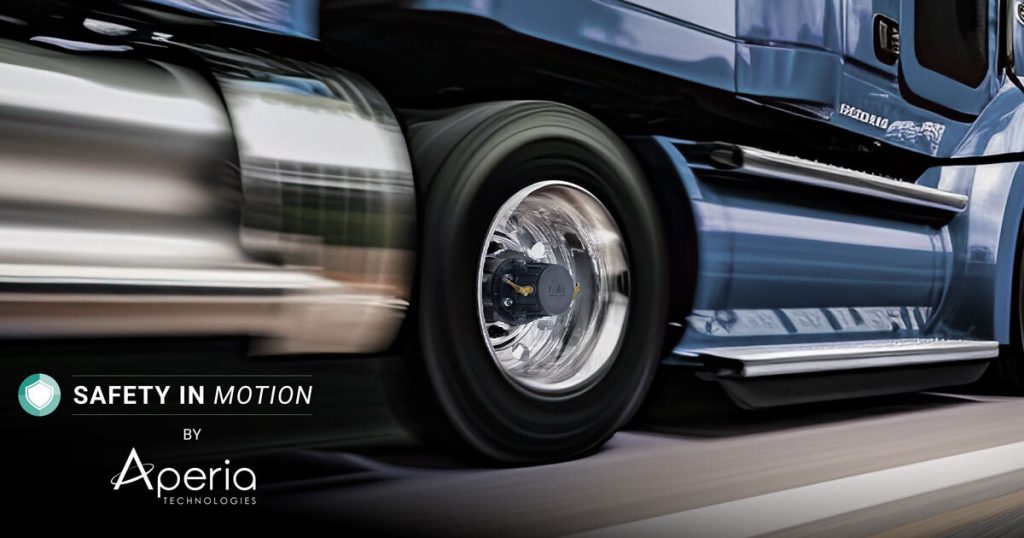
Welcome to Safety in Motion: Navigating the Road to a Safer Future. This blog series by Aperia Technologies is presented to explain the critical importance of tire management for trucking safety, fostering discussions that lead to actionable solutions.
At Aperia Technologies, safety is a commitment to delivering solutions that positively impact every driver’s well-being as well as the safety of the general public. The trucking industry is the backbone of our economy, a lifeline of businesses and communities working tirelessly and safely to transport the goods and services we all rely on.
This series will explore the multifaceted aspects of safety – from regulatory compliance to advanced technological interventions. We’ll discuss the latest safety trends, techniques, and technologies. Stay tuned for insights that drive not only safer roads but also smarter fleet operations.
Each post in our series aims to inform, engage, and inspire you to elevate safety standards within your operations. Join us on this journey to a safer trucking future.
Topic #1: The Critical Role of Maintaining Optimal Tire Inflation
Tire inflation plays a pivotal role in the safety and efficiency of trucking operations. Properly inflated tires are essential for the safe handling of trucks on the road. Underinflated tires can lead to a variety of safety issues, including poor handling, increased stopping distances, and a heightened risk of tire blowouts — factors that significantly contribute to accidents on highways. Moreover, industry regulators like the Federal Motor Carrier Safety Administration (FMCSA) specify that no motor vehicle shall be operated on a tire that has a cold inflation pressure less than that specified for the load being carried.1
Furthermore, tires that are not optimally inflated suffer from uneven wear and tear, reducing the lifespan of the tires, reducing the ability to retread, and increasing the frequency and cost of replacements. Correct tire pressure also impacts fuel efficiency, as underinflated tires require more energy to move and maintain speed, thus increasing fuel consumption.
How Fleets Can Achieve Optimal Tire Pressure
Achieving and maintaining the correct tire pressure can be a challenging task, especially as your fleet grows and expands. Regular manual checks are labor-intensive and can be unreliable even when performed consistently with trained technicians. To combat these challenges, automated tire inflation systems are a vital tool to improve safety for modern fleets.
Aperia’s Halo Tire Management platform offers an innovative solution, Halo Connect i3™, designed to automatically adjust the pressure in each tire, ensuring that tires are always optimally inflated. This not only enhances safety by reducing the risk of tire-related accidents but also improves fuel economy and extends overall tire life. Furthermore, it impacts the new CVSA change, which significantly reduces the likelihood of an Out-of-Service Criteria (OOSC) violation for trucks and trailers equipped with automatic tire inflation systems (ATIS).
Integrating such advanced systems into your fleet operations can lead to significant improvements in safety, cost efficiency, and operational uptime. Halo Connect i3 works by using the rotation of the wheel to maintain constant, correct tire pressure without the need for external power sources or regular driver intervention, which can reduce tire-related breakdowns by up to 80% to ensure your fleet stays on the road.
Optimal tire inflation is more than a maintenance checklist item; it is a critical component of road safety and operational efficiency in trucking. By leveraging technology like Halo Tire Management, fleets can ensure that this safety component is constantly addressed, leading to safer roads and more reliable transport operations.
Stay tuned as we continue to explore other essential safety topics in our Safety in Motion series. Join us in making safety a foundational aspect of your operations, moving towards a safer trucking future together.
1FMCSA 5.1.14 Tires – 49 (Code of Federal Regulations) CFR 393.75